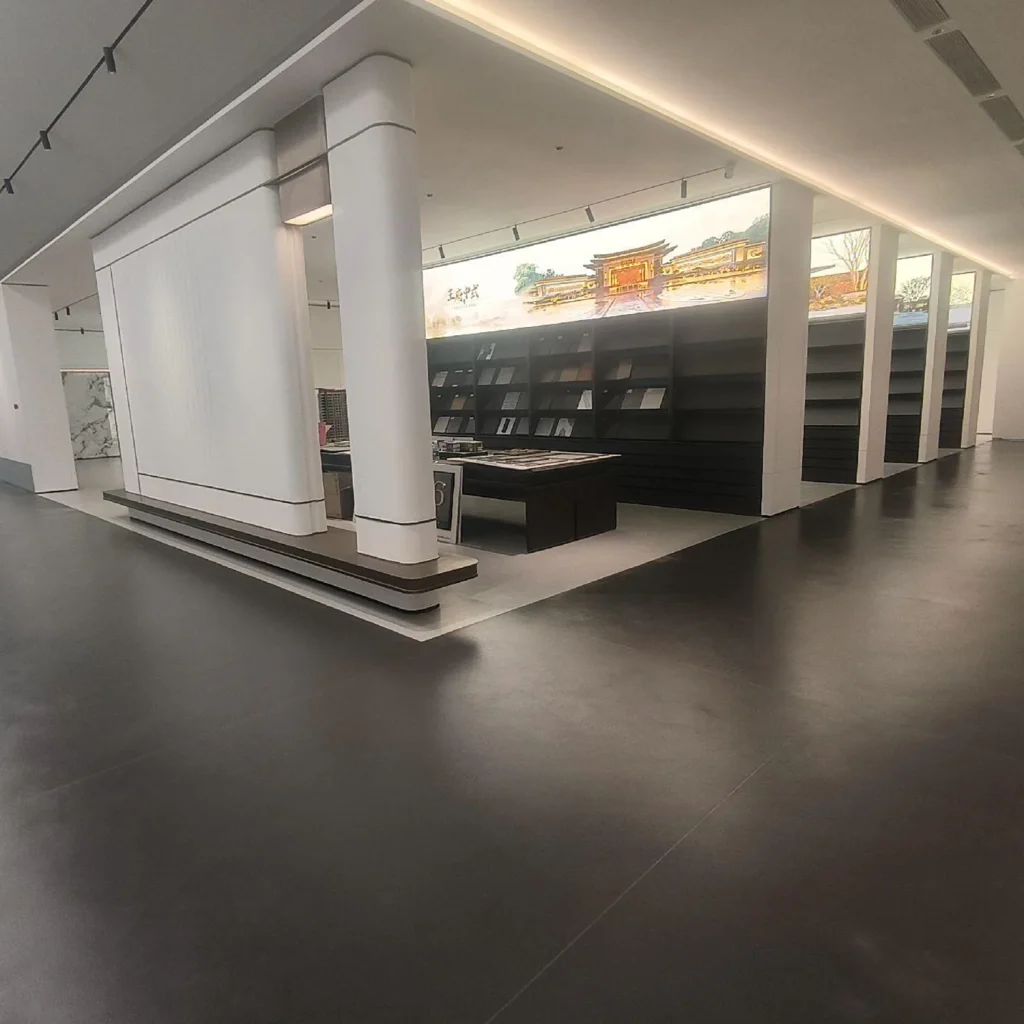
Dry Support Areas
Vinyl options for adjoining offices and dry corridors.
- Support rooms, not process zones
- Chemical and cleaning requirements
- Separate review of electrical requirements
Industrial application
Match laboratory flooring to your test processes and chemical exposure.
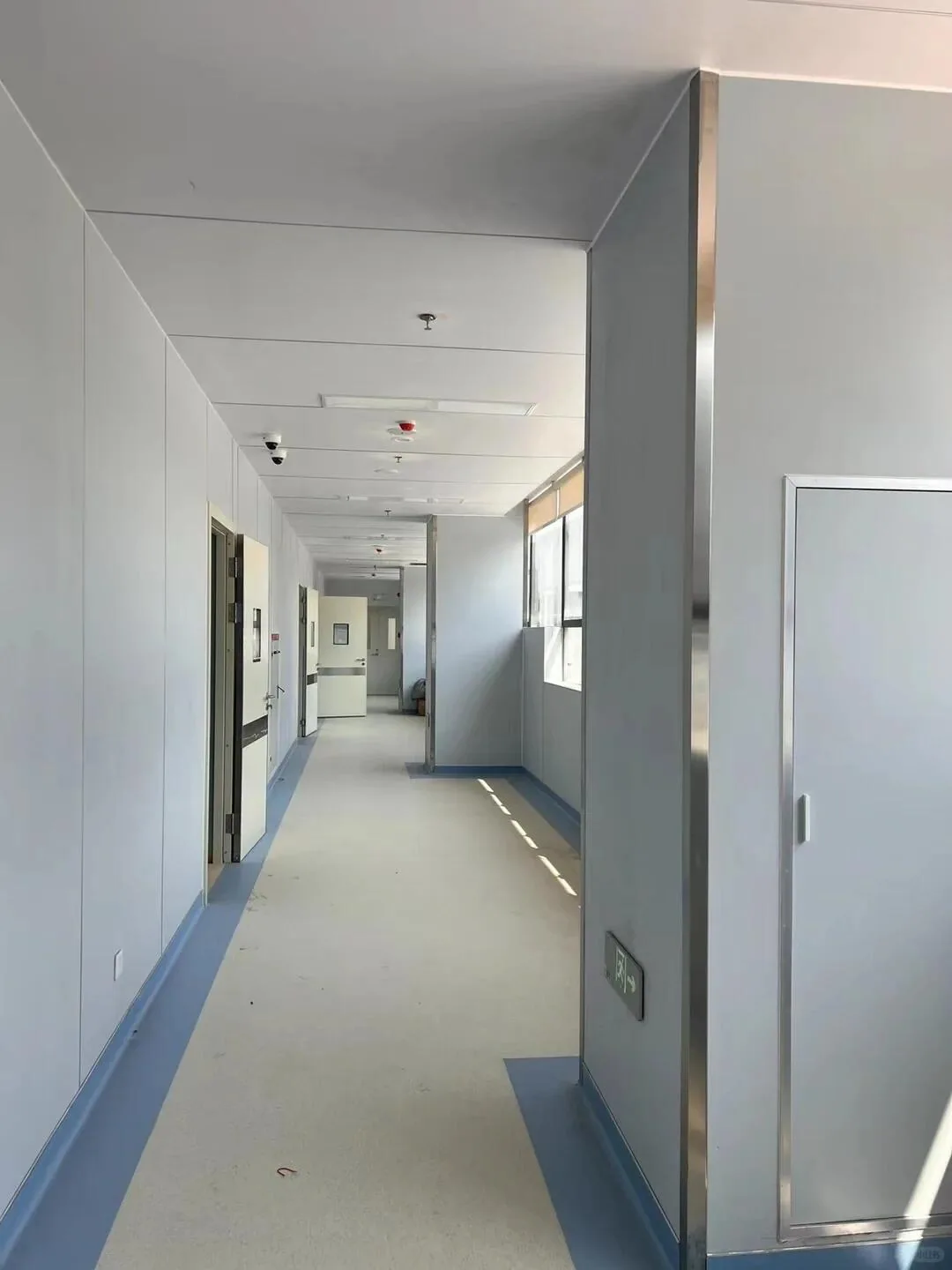
Flooring by Use
Choose for the activity and the area, not just the appearance.
Review each product and confirm the specification for your project.
Map the process areas:
List fixed and movable equipment with support points, wheels, vibration concerns, anchors, and service penetrations. Identify whether the room connects directly to production or material-handling routes.
For clinical specimen handling or medical facilities, also review our Healthcare Laboratories guidance and the facility’s clinical requirements.
Document the actual exposure:
“Chemical resistant” has no useful meaning without those conditions and an applicable product test. The project team should also define staining, decontamination, and disposal procedures.
Suitable vinyl or PVC or another smooth system may be considered for selected rooms only after chemical, load, seam, fire, emissions, electrical, cleaning, and installation data are verified. Interlocking or rubber directions may suit defined support zones, not automatically the laboratory process area.
Coordinate the floor with:
Plan how equipment replacement and floor repair will occur. If antistatic, conductive, clean room, or contamination-control behavior is required, define the standard and obtain exact system evidence.
Start with the operating brief
Bench research, quality control, pilot work, and instrument rooms create different chemical, utility, electrical, rolling-load, vibration, cleaning, and qualification needs.
| Project type | Typical context | What to prioritize |
|---|---|---|
| Bench research or quality control | Workbenches, samples, instruments, reagents, sinks, staff routes, carts, and routine cleaning. | Map chemicals, spills, benches, equipment feet, utilities, carts, seams, wall junctions, cleaning, repairs, and current evidence. |
| Pilot or process laboratory | Larger equipment, process skids, heat, liquids, utilities, moving materials, and operating conditions closer to production. | Define static and rolling loads, anchors, chemicals, temperature, drainage, joints, installation access, shutdowns, and industrial approval requirements. |
| Instrument or controlled room | Sensitive equipment with vibration, static, cleanliness, power, calibration, access, or environmental controls. | State the exact vibration, electrical, contamination, levelness, seam, cleaning, service, qualification, and change-control criteria required. |
Specification checklist
Check the requirements below before selecting a product.
Map samples, materials, staff, equipment, carts, waste, clean and dirty routes, operating hours, and access controls.
Provide instrument and bench weights, feet, anchors, vibration sensitivity, relocation paths, power, gases, water, drains, and service zones.
List substances, concentrations, contact times, temperatures, hot work, spill response, cleaning chemistry, and evidence needed.
Define static, conductive, insulating, grounding, contamination, classification, or qualification requirements only where the project calls for them.
Survey moisture, levels, cracks, joints, seams, coving, thresholds, penetrations, drains, walls, and adjoining systems.
Plan phasing, containment, downtime, repairs, cleaning, validation, change control, tests, certificates, maintenance, and responsible approvers.
Build a usable brief
For a flooring recommendation, share:
Planning Your Project
This page covers research, production testing, quality control, pilot, and material-analysis settings. Healthcare Laboratories focuses on clinical and diagnostic workflows connected to patient care.
Only after the exact exposure schedule is compared with approved data for the selected model and installation. No blanket chemical-resistance claim is made.
No such capability is confirmed in this draft. Define the electrical requirement and test method, then review official product documentation.
Talk to Our Team
Share your plans with us for a flooring recommendation.
Discuss Your Project